Common car problems include a dead battery, engine overheating, worn tires, transmission slipping, and a check engine light. What you do next depends on the symptom. Steam under the hood, a flashing check engine light, or reduced braking calls for a safe stop. A dirty air filter or a burned-out bulb is often a simpler repair.
Use this list of 12 common car problems to match what you’re noticing to a likely cause, see what to check first, and decide when a repair quote is worth getting.
Car Problems by Symptom
| What you notice | Possible cause | What to do next |
|---|---|---|
| Steam or temperature gauge in the red | Cooling system fault | Pull over safely, shut off the engine, and call roadside assistance. |
| Flashing check engine light and shaking | Active engine misfire | Pull over safely and arrange a tow. |
| Red oil pressure warning | Possible loss of oil pressure | Pull over safely, shut off the engine, and arrange a tow. |
| Soft brake pedal or reduced braking | Possible brake system fault | Pull over as safely as possible and arrange a tow. |
| Engine revs but the car barely accelerates | Possible transmission or clutch fault | Arrange a tow if the car can’t maintain speed safely. |
| Clicks when you try to start the car | Weak battery, poor connection, or starter fault | Ask for a battery and starting-system test. |
| A/C blows warm and the fan works | Possible refrigerant leak or A/C component fault | Schedule A/C diagnosis. |
7 Major Common Car Problems
These issues can need more diagnosis or labor. Start with the symptoms below before assuming you need an expensive part.
Overheating
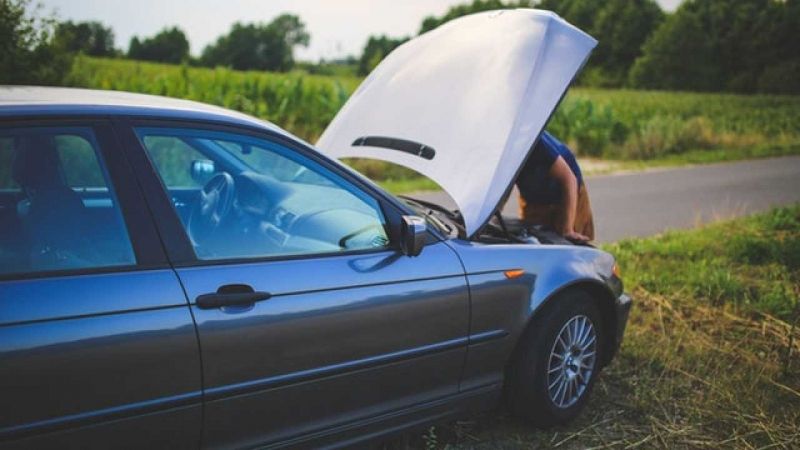
A temperature gauge in the red, a coolant warning, or steam under the hood can signal an overheating engine. Pull over somewhere safe, shut off the engine, and call roadside assistance if the car overheated. Never open the radiator or pressurized coolant reservoir while the engine is hot.
Possible causes include a coolant leak, a stuck thermostat, a failed cooling fan, a clogged radiator, or a bad water pump. Adding coolant to a cold engine may restore the level temporarily, but a recurring drop needs diagnosis. A shop can pressure-test the cooling system and check fan operation before recommending a radiator replacement.
Faulty transmission
Slipping gears, delayed engagement when you shift into Drive, harsh shifts, or engine revs that rise without a matching increase in speed can point to a transmission problem. If the car cannot accelerate predictably or loses drive, pull over safely and arrange a tow.
A leak, a sensor or solenoid fault, or internal wear can produce similar symptoms. Ask the shop to identify the leak or fault before approving a repair. Topping off fluid won’t fix a leak. Use only the fluid and level-check procedure specified for your vehicle.
Engine sputtering
A sputtering engine may stumble under acceleration, idle roughly, or shake. Worn spark plugs, a failing ignition coil, a vacuum leak, a fuel delivery problem, or low compression can all cause similar symptoms.
If the check engine light flashes, especially with shaking or loss of power, pull over safely and arrange a tow. A flashing light can indicate a misfire that can damage the catalytic converter. Ask for the diagnostic trouble codes and the test results before replacing parts. A code can identify the affected system or cylinder and guide testing.
Emissions problems
A steady check engine light or a failed smog test can point to an emissions-related fault. Possible causes include a loose gas cap on vehicles that use one, an EVAP leak, an oxygen sensor issue, or a damaged catalytic converter. An inspection report can also show that an emissions monitor is not ready after a battery disconnect or a code reset.
Keep the test report and have the cause diagnosed before paying for a retest or a new converter. Testing requirements vary by state and county. If the light starts flashing or the car runs rough, treat it as an urgent engine problem.
Malfunctioning alternator
A battery-shaped warning light while the engine is running generally points to the charging system. Dimming lights, erratic electronics, or a car that starts after a jump and then stalls can go with it. Possible causes include a bad alternator, a loose belt, or a wiring problem.
If the warning comes on while you’re driving, get to a safe place and call for help. Have the battery, charging output, belt, and connections checked before replacing the alternator or battery.
Air conditioner doesn’t work
If the fan blows normally but the air stays warm, a refrigerant leak, compressor fault, or blend door problem may be to blame. Weak airflow at every temperature can point to a clogged cabin air filter or a blower problem.
Describe whether the A/C blows warm, has weak airflow, or only works intermittently. Ask the shop to diagnose the specific fault and check for a leak before paying for a recharge or a compressor. If you can’t keep the windshield clear, stop driving until visibility is restored.
Cracked head gasket
A failed or blown head gasket can cause repeated overheating, unexplained coolant loss, or thick white exhaust that persists after the engine warms up. A cold-start puff of condensation alone can be normal. No single symptom confirms a head gasket failure.
Ask whether testing found combustion gases in the coolant or a loss of compression, and whether overheating may have damaged the cylinder head. If the engine is overheating, shut it down and arrange a tow. Ask for an itemized quote before deciding whether the car is worth repairing.
5 Common Car Problems That Take a Day to Fix
These repairs can often fit into one shop visit when the part is available. The underlying cause and the condition of the car can change the timing.
Dead battery
If your car won’t start, notice whether you hear rapid clicking, a single click, or the engine cranking normally. Rapid clicking or slow cranking can point to a weak 12-volt battery or a poor connection. A car that cranks normally but won’t start needs a different diagnostic path.
Have the battery load-tested and the terminals and charging system checked. If the battery goes flat again after it’s charged, ask about a parasitic drain. Follow the owner’s manual for jump-starting, and never try to jump a swollen or leaking battery.
Clogged air filter
A dirty engine air filter can restrict airflow and reduce power under load. Check the filter condition and the maintenance schedule for your vehicle. If fuel economy drops, track it with our miles per gallon calculator and share the change with your mechanic. Fuel economy can fall for several reasons, including low tire pressure.
The engine air filter and cabin air filter serve different systems. If the symptom is weak airflow from the dashboard vents, start with the cabin filter and blower.
Broken lights
A failed headlight, brake light, or turn signal can make it harder to see and be seen. Check all exterior lights while parked, with someone helping if needed. A single failed lamp may need a bulb or an LED assembly. Several failed lamps can point to a fuse, wiring, or a shared ground.
Replace failed lights promptly. If a headlight is out, avoid driving at night or in poor visibility. If the brake lights don’t work, arrange a repair before driving.
Cracked windshield
A glass shop may be able to repair a small chip before it spreads. A crack at the edge, damage in the driver’s line of sight, or a larger crack may require replacement. If damage blocks your view, arrange mobile service or towing.
Ask whether the quote includes calibration for a windshield-mounted camera if your car has one. Chip repair and windshield replacement are different jobs, and parts or calibration can extend the turnaround.
Uneven tire wear
Wear on one edge, cupping, or a pull to one side can point to incorrect tire pressure, an alignment issue, or worn suspension parts. Check cold tire pressure against the sticker in the driver’s door area and have a shop inspect the wear pattern.
Rotation can help even out future wear after the cause is fixed. Replace tires at 2/32 inch of tread. If you see a sidewall bulge, exposed cords, or rapid pressure loss, stop driving on that tire and use roadside assistance.
How Much Do Common Car Repairs Cost?
These are U.S. estimates from RepairPal for specific jobs, checked in November 2026. Taxes and fees are extra, and quotes vary by vehicle, ZIP code, and related work. A symptom can lead to a much smaller repair than the example shown.
| Repair or service | Estimated U.S. cost |
|---|---|
| Engine air filter replacement | $79–$99 |
| Tire rotation | $49–$72 |
| Battery replacement | $456–$493 |
| Alternator replacement | $809–$1,088 |
| Radiator replacement | $1,368–$1,550 |
| Head gasket replacement | $2,572–$3,386 |
Should You Repair or Sell a Car With Mechanical Problems?
- Get an itemized quote for the diagnosed problem and ask what the shop tested. For a major repair, consider a second estimate.
- Add any work the car will need soon, especially tires, brakes, or repairs required to pass inspection.
- Compare the total with the car’s value after repair, an as-is offer, and the cost of replacing it. If a single repair gets a dependable car back on the road, fixing it can make sense. Several major repairs on a low-value car may make selling it the better option.
If the numbers favor selling, we at JunkCarsUs buy many cars with mechanical problems, including non-running cars. Call (855) 547-1550 or contact us online with the year, make, model, mileage, and condition. You can also use our scrap car value calculator to get a starting point. If you accept our offer, we’ll arrange free towing. Same-day pickup may be available depending on your location and scheduling.
FAQ
What are common major problems with cars?
Overheating, transmission slipping, severe engine misfires, charging system failure, and a blown head gasket can leave a car undrivable. Brake or steering problems can also require a tow. Get a diagnosis before deciding how much the repair will cost.
What are common problems that can be repaired in a day?
A 12-volt battery, engine air filter, accessible light bulb, or small windshield chip can often be handled in one visit. Tire rotation can also be quick. The repair can take longer if the shop finds a charging fault, wiring damage, or an alignment or suspension problem.
Why won’t my car start if the lights still work?
Lights draw less power than the starter. A weak battery can still turn on the lights but fail to crank the engine. A bad connection or starter can also cause a no-crank condition. A battery load test and starter circuit check help narrow it down.
Is it worth fixing an older car with multiple problems?
Get a written estimate for the current repair and any upcoming safety work. Compare that total with the car’s value after repairs, what you could sell it for as-is, and the cost of getting another dependable car.

 Like
 x.com