A rattling noise when accelerating can come from a loose exhaust heat shield, worn engine mounts, a damaged catalytic converter, or an engine or drivetrain problem. A light metallic buzz underneath the car calls for a different check than a deep knock from the engine. The most useful clues are where the noise comes from, whether it follows engine RPM or road speed, and what happens when you ease off the gas.
Start with the symptom guide below. It can help you explain the problem to a mechanic, but sound alone cannot confirm which part has failed.
Can You Keep Driving With a Rattling Noise?
Pull over safely and shut the engine off if the rattle comes with an oil-pressure warning, overheating, a deep engine knock, severe shaking, smoke, or a sudden loss of power. Arrange a tow rather than repeatedly starting or revving the engine to test it.
- Flashing check engine light with rough running: stop driving and seek assistance; an active misfire can damage the catalytic converter.
- Exhaust fumes inside the cabin: stop safely, get out into fresh air, and have the exhaust inspected before driving again.
- Clunking with loose steering, pulling, or changed braking: stop and arrange an inspection or tow.
- Light tinny rattle without other symptoms: schedule an inspection soon. Do not assume a heat shield is the cause until the noise has been located.
Rattling Noise When Accelerating: Symptom Guide
Use these patterns to narrow down the inspection, not to order parts. Noise can travel through the body, so a rattle that seems to come from the front may originate farther underneath.
| Sound and driving condition | Possible source | What to do next |
|---|---|---|
| Tinny metallic buzz underneath at a narrow RPM range | Loose heat shield, exhaust bracket, or exhaust contacting the body | Have shield fasteners, hangers, and exhaust clearance checked |
| Rattle like pebbles in a can near the converter, sometimes with reduced power | Broken catalyst material; an external shield can sound similar | Ask for an exhaust and converter diagnosis before replacement |
| Clunk as you press or release the gas, with vibration | Engine or transmission mount, driveline joint, or exhaust contact | Have mounts and drivetrain movement inspected |
| Light metallic pinging under load or uphill | Combustion knock, or a mechanical rattle that mimics it | Check the required fuel grade and arrange diagnosis if it persists |
| Rattle or tapping that speeds up with engine RPM, including while stationary | Oil supply, valvetrain, timing components, belt tensioner, or accessory bearing | Check warning lights and oil level; avoid further testing if the sound is heavy |
| Clicking or clunking mainly while accelerating through a turn | CV joint, axle, or another front-end component | Have the axle boots, joints, and suspension inspected |
| Rattle mainly over bumps, even with little throttle | Suspension, brake hardware, loose underbody panel, or cargo | Rule out loose items; have wheel-area noises checked promptly |
Common Causes of Rattling Noises During Acceleration
Loose Heat Shields and Exhaust Components
A thin metal heat shield can buzz when rust weakens its mounting points. Acceleration changes engine vibration and exhaust movement, making the sound noticeable at certain RPMs. Broken exhaust hangers, loose brackets, or a pipe touching the body can create a similar metal rattling noise when accelerating.
The repair depends on the condition of the parts: sound mounting points may need appropriate replacement hardware, while badly corroded shields or brackets may need replacement. An exhaust leak requires its own repair. Do not remove a heat shield as a permanent way to silence the noise; it protects nearby components from exhaust heat.
Worn Engine or Transmission Mounts
Mounts support the powertrain and limit its movement. When a mount wears or separates, applying the gas can produce a clunk or vibration, or let the exhaust touch surrounding parts. A noise when moving off from a stop or changing between acceleration and coasting makes mount inspection useful, but does not prove the mount is faulty.
A technician can check mount condition, fasteners, and contact marks. Do not try to reproduce the noise by holding the car against the brakes while pressing the accelerator.
Engine Rattling: Oil, Timing Components, and Internal Wear
If the engine rattles when accelerating, low oil level or an oil-pressure problem may affect lubrication and hydraulic components. Worn valve lifters, timing-chain guides or tensioners, and internal engine wear can also produce tapping or rattling. A deep knock that grows louder under load needs urgent attention.
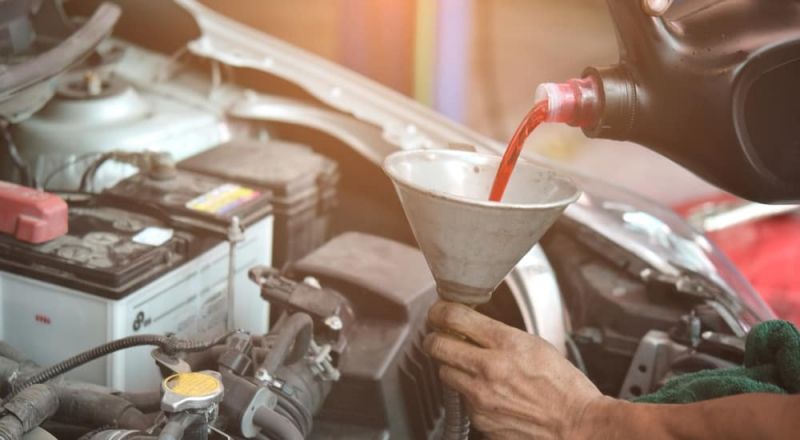
Check oil on level ground using the procedure in your owner's manual. If it is low, use the specified oil and avoid overfilling. A correct dipstick level does not prove that oil pressure is adequate. If the oil-pressure warning remains on, shut the engine off and arrange a tow.
Do not assume every engine rattle requires an engine rebuild. Diagnosis should establish whether the problem is an external accessory, oil supply, timing component, or internal damage before you approve major work. Follow the manufacturer's maintenance schedule rather than using additives to mask the sound.
Pinging or Spark Knock Under Load
A light metallic ping while accelerating uphill can be combustion knock. It may be associated with fuel below the engine's required octane rating or a problem that needs diagnosis, such as overheating or abnormal engine operation. Exhaust and shield rattles can imitate pinging, so fuel is not the only possibility.
Use the fuel grade specified in your owner's manual. Switching every rattling car to premium gasoline is not a reliable repair. If the correct fuel is already in the tank and the knocking is heavy or persistent, reduce load and have the vehicle checked instead of continuing hard acceleration.
Damaged Catalytic Converter
A converter's broken internal material can rattle inside its housing. A loose outer heat shield may sound similar, so the shop should distinguish the two. Reduced power can indicate restricted exhaust flow, but neither the sound nor a P0420 or P0430 code alone proves that the converter needs replacing.
A replacement should address the cause of the original failure, including relevant misfire or engine-running problems. Compare a vehicle-specific estimate with our guide to catalytic converter repair and replacement costs. The replacement must suit the vehicle and applicable emissions requirements.
Belt Tensioner, Pulleys, and Accessory Bearings
A rattle from the belt side of the engine may involve a worn tensioner or pulley bearing. Changes when the air conditioning is switched on can provide a useful clue, but do not identify the failed part by themselves. A shop can inspect belt tracking, tensioner movement, and bearing condition using the manufacturer's procedure.
Keep hands, clothing, and tools away from belts and fans. Do not spray lubricant on the belt to silence it or remove it for a test unless you have the correct procedure and skills.
Transmission, Axle, and Suspension Problems
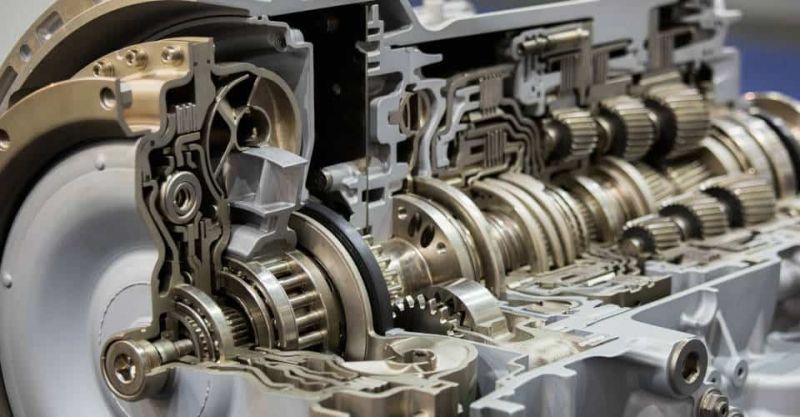
A rattle accompanied by slipping, delayed engagement, or harsh shifts deserves a transmission inspection. Noise under acceleration can also involve CV joints, a driveshaft joint, or other driveline components. Clicking through a turn is a different clue from a rattle heard while the vehicle is stationary.
Suspension parts are more suspect when the sound follows bumps or cornering rather than throttle alone. Worn ball joints, bushings, or sway bar links need a physical inspection. Do not treat a wheel-area rattle with handling changes as a minor nuisance.
Check transmission fluid only if the owner's manual provides an owner-check procedure. Many vehicles require a specified fluid temperature and shop equipment; adding an arbitrary fluid or using additives can make matters worse.
What Different Acceleration Patterns Tell You
Rattling When Accelerating at Low Speed
During takeoff, the powertrain moves under load while engine RPM rises. Mounts, exhaust clearance, and driveline joints are useful inspection points. A narrow band of metallic buzzing can instead be resonance from a loose shield. Note whether the sound occurs only while moving or is also present at idle.
Rattling When Accelerating Uphill
Hills increase engine load, which can expose pinging, mount movement, or an exhaust contact problem. Tell the mechanic whether the noise appears at the same RPM on level ground and whether easing off the gas stops it. Do not repeatedly climb a hill or accelerate hard just to recreate a worrying noise.
Rattle at a Certain RPM or Only While Moving
A rattle around a particular engine speed can point toward a vibration-sensitive part, but the RPM range is vehicle-specific. Noise that follows road speed more closely than engine speed shifts attention toward wheels, axles, or the driveline. If the sound also occurs while stationary, wheel rotation is less likely to explain that same noise.
How to Check a Rattling Sound Safely
- Check the warning signs first. Stop testing if there is heavy knocking, an oil-pressure warning, overheating, major power loss, or unsafe handling.
- Record the conditions. Note cold or warm engine, approximate RPM, road speed, gear, uphill versus level road, and whether easing off the gas changes the noise.
- Rule out loose cargo. Secure the spare tire, jack, tools, and items in the cabin or trunk.
- Check oil as directed. Follow the owner's manual and investigate repeated oil loss rather than simply topping it off.
- Look from a safe position. With the engine off and fully cool, look for hanging panels or obvious exhaust damage. Never crawl under a vehicle supported only by a jack or touch a hot exhaust.
- Bring useful evidence. Have a passenger record the sound if safe; do not use a phone while driving. Share any stored diagnostic codes without assuming they name the failed part.
A shop may need a road test, lift inspection, scan data, oil-pressure testing, or exhaust testing. Ask what observation or test confirms the proposed repair.
Repair Options: What Should You Budget For?
There is no single price for fixing a car that rattles when accelerating. Vehicle design, rust, local labor rates, and the actual failure matter more than how loud the sound is. Get a written diagnosis and an itemized estimate before comparing options.
| Confirmed issue | Typical repair approach | Main cost considerations |
|---|---|---|
| Loose shield or exhaust hanger | Secure or replace damaged hardware, shield, or hanger | Access and corrosion; this can be a relatively small repair |
| Failed mount or belt tensioner | Replace the confirmed failed component and inspect related parts | Part location, labor time, and additional damage |
| Broken converter core | Correct the underlying problem and fit a suitable converter | Vehicle application, emissions specification, and number of converters |
| Axle or suspension wear | Replace worn parts and check alignment where required | Which joints or assemblies failed and whether multiple parts are involved |
| Internal engine or transmission damage | Compare targeted repair, rebuild, and replacement options | Extent of damage, warranty, labor, and the car's overall condition |
A small exhaust repair can make sense on an otherwise reliable car. For a major failure, compare the full repair estimate, other upcoming work, and the car's likely value afterward with its as-is value. A rattle by itself is not a reason to scrap a vehicle. If diagnosis confirms costly engine damage and you decide against repair, JunkCarsUs also buys cars with blown engines; compare an offer with your repair options before deciding.
Frequently Asked Questions
Why Is My Car Making a Rattling Noise When I Accelerate?
Possible causes include a loose exhaust heat shield, worn mounts, damaged converter material, engine lubrication or timing problems, and drivetrain wear. Location, engine RPM, road speed, and accompanying symptoms help determine which system to inspect first.
Why Does the Rattle Stop When I Take My Foot Off the Gas?
Releasing the accelerator changes engine load, powertrain movement, and vibration. That can quiet exhaust contact, a worn mount, or combustion knock. It is a useful diagnostic clue, not proof of a specific failed part.
Can Low Oil Cause Rattling During Acceleration?
Yes. Insufficient oil can affect lubrication and hydraulic engine components. Check the level correctly, but remember that low oil pressure can occur even with a normal level. An oil-pressure warning or deep knock calls for shutting the engine off.
Is a Metallic Rattle Always the Catalytic Converter?
No. Loose heat shields, brackets, and other exhaust parts can make similar sounds. Have the shop locate the noise and test suspected converter problems before approving replacement.
Can I Fix a Rattling Car Myself?
You can secure loose cargo, note when the noise occurs, and check oil according to the owner's manual. Under-car repairs, engine timing work, and drivetrain diagnosis require suitable equipment and skills. Arrange professional help when the source is unclear or any warning signs appear.

 Like
 x.com