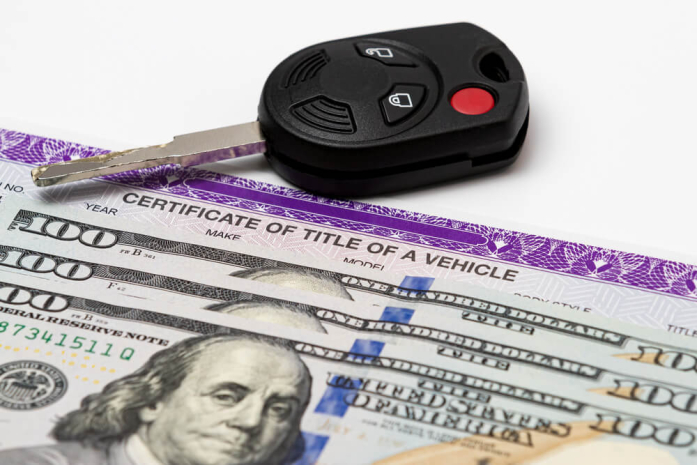
A clean title means a car has no recorded title brands such as salvage, rebuilt, flood damage or an odometer discrepancy. It describes the vehicle's title status, not its mechanical condition. A clean-title car can still have accident damage, expensive repairs or an outstanding loan.
Before buying, check three things separately: the title and its history, the seller's right to transfer ownership, and the car's actual condition. Here is what to look for and what to do when those checks do not agree.
What Does Clean Title Mean?
In a used-car listing, “clean title” generally means the state-issued certificate of title is unbranded. A title brand is an official notation about a vehicle's history, such as salvage, rebuilt, flood, junk or a manufacturer buyback. The wording and rules vary by state; “clean” may not be printed on the document at all.
The physical title of your car identifies the vehicle and its owner. It is not a maintenance record or a guarantee that every accident has been reported. Check the current document against earlier title records before accepting a seller's description.
What a Clean Title Does Not Guarantee
- No accidents: a collision or repair does not automatically trigger a title brand.
- No major repairs: an engine replacement, body repair or other expensive work may not change title status.
- No liens: a lender can have a recorded security interest in a car with an unbranded title.
- One owner: owner count and title branding are separate parts of a vehicle's history.
- Safe to drive: tires, brakes, airbags and structural repairs still need inspection.
Clean Title vs. Clear Title: What Is the Difference?
Clean usually refers to title branding; clear usually refers to the absence of an outstanding lien or ownership claim. Sellers sometimes use these terms interchangeably, so ask exactly what they mean and verify both.
A financed car can have a clean title while the lender still has a lien. A rebuilt car can be paid off and free of liens while retaining its rebuilt brand. Paying off a loan clears the lender's interest through the required release process; it does not erase a damage brand.
For example, a used sedan with no title brands and an unpaid auto loan may be clean but not yet clear for an unrestricted transfer. Ask the lender and titling agency how payoff, lien release and transfer will be handled before paying the seller.
Clean Title vs. Salvage vs. Rebuilt Title
Salvage and rebuilt are common types of branded titles. They tell a buyer something different from a clean title or a lien release.
| Title status | What it means | What a buyer should check |
|---|---|---|
| Clean / unbranded | No adverse brand is recorded on the current title. | Earlier brands, accident records, liens and an independent inspection. |
| Salvage | The vehicle meets the issuing state's salvage criteria, often following a total loss. | Whether rebuilding is allowed and what must happen before registration or road use. |
| Rebuilt / reconstructed | A previously salvage vehicle has completed the applicable state process for retitling. | Repair evidence, registration eligibility, insurance availability and repair quality. |
| Nonrepairable / parts only | A restrictive designation generally intended for parts or scrap. | The exact document and state rules; do not assume a rebuilt title is available. |
A salvage vehicle generally cannot be registered for normal road use until it completes the applicable rebuilding and titling process. Inspection requirements differ. For example, New York's salvage examination checks for stolen vehicles and parts; it is separate from a safety inspection. Passing a state process is not a warranty on the repairs.
Can a Car Have a Clean Title After an Accident or Total Loss?
Yes, a car can have a clean title after an accident. Damage that does not trigger the applicable branding rules may leave the title unbranded. Repairs paid for privately may also be missing from commercial history reports. “Clean title” and “accident-free” are different claims.
An insurance total-loss decision and a state title brand are also separate records. Branding requirements can depend on the state, the vehicle's age and the type or extent of damage. Reporting delays or errors can create discrepancies. Do not assume an unbranded document rules out a total-loss record.
If a seller advertises “clean title, insurance total loss,” pause the purchase. Ask for the claim documents, verify current status with the titling agency, and confirm whether a brand or registration restriction is required. Have an independent mechanic or body specialist assess the damage.
What Does a Clean Title Look Like?
There is no nationwide clean-title color or layout. A paper certificate usually lists the VIN, year, make, owner, title number and issue date, with areas for liens, brands and odometer disclosures. Some states use electronic titles instead.
A blue or green title is not proof of a clean history. Texas, for example, issues blue titles for regular vehicles and also for rebuilt vehicles; a rebuilt title carries the relevant notation. Read the brand and remarks fields rather than relying on paper color.
Look for erasures, inconsistent type, missing information or a VIN that differs from the vehicle. A photo or photocopy alone does not establish that the seller can complete the transfer. If the title is electronic, confirm the official transfer procedure with the issuing agency.
How to Check If a Car Has a Clean Title
- Match the VIN. Compare the title, windshield VIN and vehicle identification label. For most modern cars, the VIN has 17 characters. Resolve any mismatch before proceeding.
- Verify the seller's authority. Check the owner's name and any dealer reassignment or other authorization. Ask why a private seller is not named on the title.
- Read all brands and remarks. Check both sides of the document for salvage, rebuilt, flood, junk, buyback and odometer notations.
- Check the issuing state's records. Ask its DMV or equivalent titling agency about current title status, lien information and transfer requirements. Online access and the details available vary.
- Review title history across states. Obtain an NMVTIS report through an approved consumer provider. Investigate earlier brands, total-loss or salvage entries that conflict with the current title.
- Compare additional records. Review an AutoCheck or other vehicle history report, service receipts and repair invoices. NICB VINCheck offers a free check of participating insurers' theft and salvage records, but it is not a complete title-history search.
- Arrange an independent inspection. Ask the shop to check structural repairs, flood evidence, airbags and mechanical condition. Get insurance and financing approval for the specific VIN before committing.
The Department of Justice explains what an NMVTIS report includes. Its focus is title, brand, odometer, total-loss and salvage information. It does not replace a repair history or physical inspection, and a report with no adverse entries cannot guarantee that damage never occurred.
Questions to Ask Before Paying
- Is this the current title, and can you transfer it into my name?
- Has the car ever had a salvage, rebuilt, flood or total-loss record?
- Is there an active lien, and how will the lender release it?
- Can I see repair invoices and arrange my own inspection?
- Why does the title or report show a different status from the listing?
What Is Title Washing?
Title washing is fraud that conceals a vehicle's adverse title history so it can be sold as if that history did not exist. It can involve altered documents, false information or misuse of differences between state titling systems. Moving a vehicle to another state does not make its damage history disappear.
For a buyer, the warning sign is a mismatch: an apparently unbranded title paired with an earlier salvage, flood or total-loss record. Multiple interstate transfers close together deserve investigation, but do not establish fraud on their own.
Warning Signs and What to Do
| Warning sign | Your next step |
|---|---|
| The seller refuses to provide the VIN or show the title. | Do not pay a deposit until the vehicle and ownership can be verified. |
| A prior brand is missing from the current document. | Ask the issuing agency to explain the discrepancy and review interstate title history. |
| Water stains, corrosion or repairs conflict with the listing. | Get a specialist inspection and request supporting repair records. |
| The VIN, mileage or owner's name does not match. | Resolve the discrepancy through official records before purchase. |
| The seller says a brand disappears after repairs. | Verify the applicable state process; repairs do not erase a valid salvage history. |
If you already bought the car, keep the listing, messages, report and sale documents. Contact the issuing motor vehicle agency about the title discrepancy and the relevant consumer-protection or law-enforcement office if you suspect fraud.
Can You Get a Clean Title After a Salvage or Rebuilt Title?
Repairing a salvage car does not turn it into a clean-title car. Where eligible, it may receive a rebuilt or similar branded title after the required state process. Some nonrepairable designations do not permit that route. Texas, for example, retains the Rebuilt Salvage brand on rebuilt vehicles.
A genuinely incorrect record is different. Ask the agency or reporting entity that supplied the information to investigate and correct it. A duplicate or replacement title replaces a document; it does not, by itself, remove valid brands.
Buying or Selling a Car With a Clean Title
For a buyer, an unbranded title is one useful factor in the decision. Compare the asking price with similar vehicles, then account for mileage, condition, repairs and ownership costs. A clean title does not guarantee a better insurance rate, loan approval or a trouble-free car.
For a seller, describe title status and condition separately. “Clean title, non-running, engine needs repair” is more useful than “clean car” when the vehicle has a mechanical problem. Provide required damage and odometer disclosures, resolve liens through the correct process, and complete the ownership transfer. Our guide to transferring a car title explains the basic steps.
If repairs no longer make sense, we can review your vehicle for a quote. We buy damaged and non-running cars, including eligible salvage-title vehicles. Tell us the title status, location and condition so we can confirm the paperwork needed before pickup. If you need to sell without title, ask us to check what your state and circumstances allow; alternative proof of ownership is not accepted in every situation. Request an offer for your car.
Clean Car Title FAQ
Does a clean title mean no accidents?
No. A clean title describes branding status. An accident, body repair or mechanical failure can exist without a title brand. Check the vehicle's history and arrange an independent inspection.
Can a clean-title car have a lien?
Yes. An unbranded car may still secure an unpaid loan. Confirm the lender's payoff and lien-release requirements before transferring ownership.
Does “clean title in hand” mean the car is paid off?
The phrase usually means the seller says they possess the title document. It does not prove that all liens are released or that the document is current. Verify the title record and seller's authority.
Is a clean title the same as one owner?
No. A car can have several previous owners and an unbranded title. A one-owner car can also have a salvage or another adverse brand.
Can I check a clean title for free?
Some states offer free online status tools, and NICB VINCheck provides a limited free insurance-record check. Neither necessarily provides a complete history. NMVTIS consumer reports are available through approved providers, generally for a fee.
Is a corrected or duplicate title a clean title?
Those labels describe a document update or replacement. Check the actual brands, remarks and official history to determine whether the vehicle is unbranded.

 Like
 x.com