If your car won't start and just clicks, check the battery and its connections first. Rapid clicking usually means the starter is not receiving enough steady current. A single loud click can point to the starter motor or solenoid, but a weak battery, damaged cable, or poor ground can produce the same symptom. Working lights do not rule out a battery problem.
Listen to the sound, note whether the engine turns over, and use the checks below before buying parts. This guide mainly covers conventional gas and diesel vehicles with a 12-volt starting system. Hybrids and EVs use different starting arrangements; follow their owner's manuals.
Rapid Clicking vs. Single Click: What Do They Mean?
A clicking noise when trying to start a car is a clue, not a diagnosis. The table below helps you choose the next check.
| What happens when you try to start | Possible cause | What to check next |
|---|---|---|
| Rapid clicking; dash lights flicker or dim | Discharged battery or resistance at a terminal, cable, or ground | Battery charge, load test, and cable connections |
| One click, then nothing; lights still work | Starter or solenoid fault; insufficient current is still possible | Battery under load and voltage drop in the starter cables |
| Clicking continues with a jump-start | Poor booster connection, inadequate booster power, failed battery, cable fault, or starter problem | Correct jump points and equipment, then professional starting-system tests |
| Clicks with a new battery | Loose connection, incorrect or undercharged battery, bad ground, or starter fault | Installation, battery specification, and starter circuit |
| No click and no crank | Battery connection, start authorization, fuse, relay, or control-circuit fault | Battery, Park/Neutral or clutch interlock, and security messages |
| Engine cranks normally but will not run | Fuel, ignition, compression, or engine-control problem | A crank-no-start diagnosis rather than starter replacement |
Rapid Clicking Sound When Starting
The starter solenoid can engage, lose power as voltage drops, and release repeatedly. That produces the familiar click-click-click without turning the engine. A discharged or worn battery is a common reason, but corrosion and loose connections can also limit current from a healthy battery.
Single Click When Turning the Key
One heavy click may mean the solenoid engages but the starter motor cannot turn. Worn starter components are one possibility. Test the battery and power and ground paths before blaming the starter. A relay clicking in the fuse box does not prove that power reaches the starter motor.
8 Reasons Your Car Clicks but Won't Start
1. A Discharged or Weak Battery
Leaving lights on, long periods parked, repeated short trips, or battery wear can leave too little power to crank the engine. Cold weather reduces available battery output while making the engine harder to turn. A battery may still operate the radio and dashboard but fail when the starter demands much more current.
2. Corroded or Loose Battery Terminals
White or blue-green deposits and loose clamps can restrict current. A connection may look acceptable yet fail under starting load. With the ignition off, inspect accessible terminals for obvious corrosion or damage. Have loose or corroded connections serviced using the vehicle's battery-disconnection procedure.
3. A Damaged Battery Cable or Poor Ground
The negative cable and engine ground strap complete the starter's circuit. A loose ground connection, damaged strap, or corrosion hidden inside a cable can cause clicking even when the battery tests good. A technician can measure voltage drop while the circuit is loaded to locate excessive resistance.
4. A Faulty Starter Motor
The starter converts electrical energy into mechanical rotation to turn the engine. Worn brushes, internal damage, or a jammed drive can leave you with a single click and no crank. Intermittent starting or grinding can be additional clues, but the sound alone is not enough to authorize replacement.
5. Worn Starter Solenoid Contacts
The solenoid engages the starter drive and closes the high-current connection to the motor. Its contacts can wear or burn, allowing a click without enough current reaching the motor. On many vehicles the solenoid is part of the starter assembly, so the repair depends on the design and test results.
6. A Charging-System Fault That Left the Battery Low
The alternator replenishes the battery while the engine runs. If charging fails, the car can run down its battery and click during the next start attempt. This is an indirect cause: the alternator does not normally crank the engine. Repeated discharge needs battery and charging-system testing, plus a check for an unwanted electrical draw if both pass.
7. A Starter Relay, Ignition Switch, or Control-Circuit Fault
A relay may click without passing power through its contacts. Wiring damage or an ignition-switch fault can also interrupt the start command. These faults can cause intermittent starting or silence as well as clicking. Do not replace a relay just because you hear it operate; the circuit needs testing against vehicle-specific service information.
8. A Mechanically Locked Engine or Accessory
Less commonly, the starter cannot turn because the engine or a belt-driven accessory is locked. Suspect a mechanical problem more strongly if the vehicle stalled after overheating, oil-pressure loss, or water ingestion. Stop repeated attempts and have it inspected. A no-start click by itself does not establish a locked-up engine.
How to Diagnose a Car That Won't Start and Just Clicks
- Park safely and identify the symptom. Apply the parking brake, select Park or Neutral as directed by the manual, and turn off accessories. Determine whether the engine stays still or actually cranks. Avoid repeated attempts; follow the manual's starting-time limits.
- Check for warning signs before opening the battery area. Stop if you see a swollen, cracked, leaking, or possibly frozen battery, smoke, or damaged wiring. Call roadside assistance instead of attempting a jump.
- Inspect accessible connections with the ignition off. Look for loose clamps, corrosion, and damaged cables. Keep metal tools and jewelry away from the terminals. Do not reach near belts or fans.
- Test the battery, not just the lights. A battery service can check charge and starting capability. Recharge a discharged battery with suitable equipment before judging its condition.
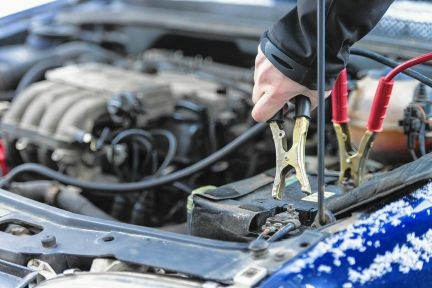
- Try a jump-start only if the manual permits it. Use the specified jump points, connection sequence, compatible voltage, and an adequately rated booster. If unsure, ask roadside assistance. A successful jump suggests a supply problem but does not identify why the battery became discharged.
- If it still clicks, request a starting-circuit diagnosis. Ask for battery testing, power- and ground-cable voltage-drop checks, and starter command and current testing. These checks can distinguish a starter fault from a cable or control problem.
- If it starts, check the cause before relying on it. Arrange battery and charging-system testing. If it runs roughly, stalls, or the charging warning stays on, stop safely and seek help rather than assuming a drive will recharge it.
Can a Multimeter Tell Whether the Battery Is Good?
A fully charged conventional 12-volt lead-acid battery often reads around 12.6 volts or higher at rest. The exact reading depends on battery type, temperature, and how recently it was charged. A normal resting voltage does not prove that the battery can deliver starting current; a load or conductance test provides more useful evidence. Voltage that collapses during a start attempt needs further diagnosis, not an automatic starter replacement.
What if the Lights and Radio Work but the Car Won't Start?
If your car won't start but the lights come on and you hear clicking, the battery is still a suspect. Lights and a radio use far less current than a starter. Lights that dim sharply or reset during an attempt suggest a power-supply problem, although they do not identify the failed part.
If the lights stay bright and you hear one click, check battery condition and cable voltage drop before testing the starter and solenoid. Neither bright headlights nor a recent battery purchase proves the complete starting circuit is healthy.
Car Won't Jump-Start and Just Clicks: What Next?
A failed jump-start does not automatically mean a bad starter. Poor clamp contact, damaged or undersized cables, a discharged booster pack, incorrect jump points, or a failed battery can prevent enough current from reaching the starter.
- Recheck the setup against the owner's manual and booster instructions with power off as directed.
- Do not keep moving live clamps around or bypass a booster's safety protections.
- If a properly performed jump still produces clicking, arrange battery, cable, and starter testing.
- Stop immediately if cables become hot, the battery hisses or leaks, or you smell burning.
New Battery but the Car Still Clicks
Check that the replacement has the correct battery type and cold cranking amp rating for the vehicle, is charged, and has securely installed terminals. The ground strap and starter cables may still be faulty. Some vehicles also require battery registration or a battery-monitor reset; follow the manufacturer's procedure.
If the car starts after replacement but the battery goes flat again, investigate charging performance and parasitic draw. Replacing batteries repeatedly will not fix the underlying fault.
Car Won't Start and No Clicking Noise: Other Possible Issues
First distinguish silence with no crank from an engine that cranks but does not start. For a silent no-crank condition, check battery connections, the selected gear, brake or clutch requirements, and key or immobilizer messages. A start interlock, blown fuse, relay, ignition switch, or wiring fault may need diagnosis.
If the engine turns normally, fuel delivery, spark, compression, or engine-control faults become more relevant. An automatic shutdown relay is vehicle-specific and is not a universal explanation for a silent starter. Avoid replacing parts without testing.
When to Call Roadside Assistance or a Mechanic
Call for help if you are in traffic, the battery looks damaged, a correct jump fails, or the car repeatedly loses power. Tell the technician whether you hear rapid clicks or one click, whether the lights dim, whether the engine turns, and what happened during a jump. Also mention recent battery work, overheating, flooding, or an engine stall.
Do not bridge starter terminals, bypass interlocks, crawl beneath an unsupported vehicle, or hit the starter as a roadside fix. Never disconnect a battery while the engine is running to test the alternator. On hybrids and EVs, leave orange cables and high-voltage components alone; disconnecting the 12-volt battery does not make that system safe to service.
Is It Worth Repairing a Car That Only Clicks?
A clicking no-start can be a manageable battery or connection repair. Get a diagnosis before deciding the car is beyond repair. Ask for an itemized estimate covering the confirmed fault, parts, labor, and any battery programming or additional electrical work.
| Diagnosis | What to consider |
|---|---|
| Battery or terminal problem | Confirm why it failed; this alone is usually not a reason to give up an otherwise usable car. |
| Starter, solenoid, or cable fault | Compare the written repair estimate with the vehicle's condition and other repairs due. |
| Confirmed major engine damage plus other expensive repairs | Compare repair and towing costs with the car's repaired value and an as-is offer. |
If the repair no longer makes sense, we buy non-running cars. Describe the symptoms and any confirmed diagnosis when you request an offer, so we can assess the vehicle in its current condition.
Preventive Measures to Avoid Starting Problems
- Have an aging battery tested, especially before temperature extremes or after slow starts.
- Keep terminals and hold-downs secure and address corrosion promptly.
- Investigate repeated discharge instead of treating each jump-start as a repair.
- For extended storage, use a compatible battery maintainer if the vehicle manufacturer permits it.
- Use the specified battery type and have charging warnings checked promptly.
Frequently Asked Questions
My car won't start, it just clicks but the battery is good. What could be the problem?
If the battery has passed a suitable test, check terminal contact, the positive cable, and the engine ground. Then test the starter, solenoid, and start-control circuit. A good resting voltage or working headlights alone does not confirm a good battery.
How do I know if my starter motor is faulty?
A single click, intermittent no-crank condition, grinding, or a motor that spins without turning the engine can suggest a starter fault. Confirm adequate battery power, cable condition, and the start signal before replacing it.
Can a bad alternator cause a clicking noise when starting?
Yes, indirectly. A charging-system fault can leave the battery too discharged to crank the engine. The click usually comes from the starting circuit. The battery light being on with the ignition on and engine off is normally expected; a warning that remains on while running needs investigation.
Why does my car click when trying to start in cold weather?
Cold reduces battery output and makes engine oil thicker, increasing the effort needed to crank. A marginal battery or poor connection may show up first on a cold morning. Use the specified oil and have the battery tested. Never jump-start a battery that may be frozen.
How often should I replace my car battery?
Many car batteries last about three to five years, but climate, use, and battery type affect life. Replace based on test results and reliability symptoms rather than age alone, and investigate charging or drain problems if it fails early.
What should I do if I still hear clicking after replacing the battery?
Verify battery specification, charge, and installation first. Then check the cables and grounds and have the starter circuit tested. A new battery cannot correct a worn starter or a high-resistance connection.
Can I keep trying to start a car that clicks?
Repeated attempts usually will not solve the fault and can heat the starter or cables and discharge the battery further. Follow the starting limits in the manual, stop if anything overheats or smells unusual, and arrange testing.
Does clicking mean the engine is blown?
No. Battery and starting-circuit problems can prevent a healthy engine from cranking. Mechanical engine damage is one less common possibility, especially after overheating or oil loss, but it requires a separate diagnosis.

 Like
 x.com