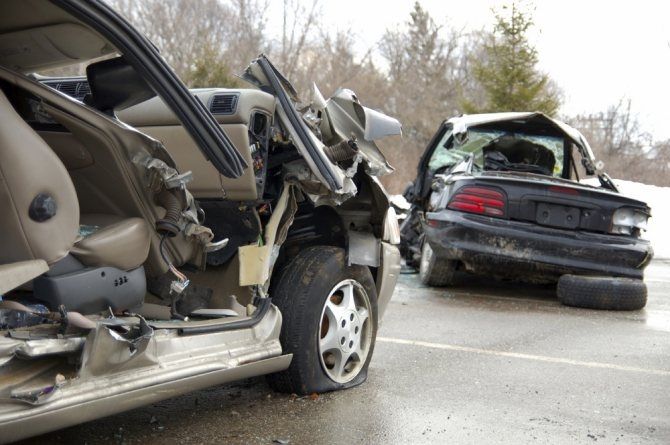
If your car is totaled and you have no insurance, first check whether another driver's insurance or any coverage already in force can pay. If no coverage applies, you are responsible for your own vehicle loss, and any auto loan still has to be repaid. You can compare repairs with selling the car as is, but resolve any lender's lien before transferring ownership.
We explain the practical options below, including what happens if you total a financed car without insurance, why GAP may not help, and how to avoid losing more money to storage fees. Having no auto policy is different from having liability insurance but no collision coverage.
What to Do With a Totaled Car and No Insurance: 6 Steps
- Put safety first. Call emergency services if anyone is injured or there is an immediate hazard. Do not drive a car with suspected structural, steering, brake, airbag, or battery damage. Arrange professional towing.
- Document the accident. When safe, photograph the vehicle and scene, collect the other driver's contact and insurance information, and obtain the crash report details. Follow local police and state crash-reporting requirements.
- Verify coverage on the accident date. Check the policy declarations, effective dates, and the type of loss. If another driver caused the crash, contact that driver's insurer. Do not assume that no collision coverage means no possible claim.
- Call your lender if you still owe money. Request the current payoff amount and instructions for handling a damaged vehicle. Keep making payments unless the lender agrees to a different arrangement.
- Control towing and storage charges. Ask the storage lot for an itemized bill, its daily rate, and release requirements. Coordinate any move with the lender and claims handler so the car remains available for inspection.
- Compare written repair estimates and as-is offers. Include towing, storage, title requirements, and any unpaid loan in your decision. Do not authorize dismantling or disposal while an inspection or ownership issue remains unresolved.
Who Pays? No Insurance vs. No Collision Coverage
The cause of the damage and the coverage that existed at the time matter more than the phrase “full coverage.” Use this table to identify which route to check first.
| Your situation | Possible source of payment | Next step |
|---|---|---|
| No policy; you caused the crash or no one else is responsible | Usually no insurance payment for your own car | Contact the lender, if any, and compare repair and salvage options. Liability for damage to others is separate. |
| No policy; another insured driver caused the crash | That driver's property damage liability coverage, subject to fault, limits, and state law | Open a third-party claim and preserve evidence before selling or scrapping the car. |
| Liability-only policy; you caused the crash | Your liability insurance generally covers qualifying damage to others, not your own vehicle | Report the crash and verify whether any additional coverage applies. |
| No collision coverage; another uninsured driver caused the crash | Uninsured motorist property damage coverage, if purchased and applicable | Ask the insurer about state availability, limits, deductibles, and hit-and-run restrictions. |
| No collision coverage; fire, flood, theft, or another non-collision event | Comprehensive coverage, if active and applicable | Check the loss type and policy exclusions. |
| Financed car with applicable collision or comprehensive coverage | A covered total-loss payment generally based on actual cash value, less applicable deductions | Coordinate with the lender. Existing GAP may address an eligible shortfall under its terms. |
What if I was uninsured but the accident was not my fault?
You may still have a property damage claim against the responsible driver or their insurer. You will need evidence of fault and the amount of the loss. An insurer may dispute liability, divide fault, or have a policy limit below the damage amount. State laws can also restrict recovery by uninsured drivers, so obtain advice for the state where the accident occurred if coverage or liability is disputed.
Driving uninsured can bring separate fines or license and registration consequences even when someone else caused the crash. Do not treat a possible claim payment as permission to continue driving uninsured.
What Happens If You Total a Financed Car Without Insurance?
You still owe the loan balance. A wreck does not cancel the finance agreement. If there is no applicable insurance payment, you must work with the lender on the debt even if the vehicle is worth very little in its damaged condition.
Tell the lender where the car is stored and whether a claim is being investigated. Ask for these details in writing:
- The payoff amount and how long it remains valid.
- Whether the lender has any applicable collateral protection coverage and what it protects; do not assume lender coverage pays your liability or eliminates your debt.
- Any hardship arrangement, payment extension, or revised payment plan available to you, including interest and fees.
- Permission and instructions for an as-is sale, payment allocation, and lien release.
Do not stop payments simply because the car is totaled. If the debt is unaffordable, discuss your options with the lender and a qualified nonprofit credit counselor or consumer attorney before taking on another loan. Approval of a payment change or debt reduction is never guaranteed.
A simple loan-balance example
Suppose you owe $12,000, no insurance payment applies, and a buyer offers $2,000 for the wreck. If the lender approves the sale and applies the full $2,000 to principal, about $10,000 remains, before any additional interest or fees. The buyer's offer is not a promise to pay off the loan, and the lender must explain how title transfer will be handled. These numbers are illustrative, not a vehicle quote.
Does GAP Insurance Cover a Totaled Car With No Insurance?
GAP is not a replacement for collision or comprehensive insurance, and you cannot buy it after an accident to cover that accident. It generally addresses an eligible difference between the vehicle's value and the loan or lease balance after a covered total loss. It does not automatically clear every dollar owed.
If you already purchased GAP, find the actual contract. An insurer's GAP endorsement and a dealer or lender's debt-cancellation waiver can have different requirements. Ask the administrator how a lapse in auto coverage affects your claim. Overdue payments, fees, deductibles, and other exclusions may reduce or prevent a benefit.
GAP also does not ordinarily pay for routine repairs or replace the need to make scheduled loan payments while a claim is reviewed. We cannot determine GAP eligibility from the vehicle's condition alone.
Is the Car Really Totaled, and Is Repairing It Worthwhile?
A total loss is an economic or legal classification; it does not simply mean the car will not start. Insurers compare repair costs with the vehicle's pre-loss actual cash value and apply relevant state rules. A total loss can occur before repair costs reach 100% of that value. Without an insurer handling your loss, get a written assessment from a qualified collision repair shop rather than deciding from photos alone.
Ask the shop to include structural repairs, airbags and seat belts, diagnostic work, and required safety-system calibration. Compare that complete estimate with the cost of obtaining reliable transportation and the car's likely value after repair.
| Option | When to consider it | Costs and conditions to check |
|---|---|---|
| Repair and keep the car | A qualified shop confirms it can be safely repaired and the full cost makes financial sense | Hidden damage, inspections, title status, insurance availability, downtime, and lower resale value |
| Sell the car as is | You want to avoid funding repairs and a buyer values usable parts or repair potential | Net offer after any fees, towing, ownership documents, damage disclosure, and lien release |
| Sell for recycling or scrap | Repair or resale demand is limited and the vehicle's remaining materials and parts have value | Local buyer quotes, completeness, transport costs, and lawful disposal paperwork |
If you receive an insurance settlement and keep the wreck, its salvage value may be deducted from the payment. If you sell the car privately without a settlement, the buyer's as-is offer is a separate amount. Neither figure is the same as the car's pre-accident value. Our totaled car value calculator can be a starting point for comparing values; an estimate is not a binding offer or insurance appraisal.
How to Sell a Totaled Car Without Insurance
An active auto policy is generally not the document that proves ownership. A lawful sale instead depends on ownership, liens, title status, and state transfer requirements. Before arranging pickup:
- Confirm that the car can be released. Finish any required claim inspection and obtain the lender's instructions if there is an outstanding lien.
- Gather the paperwork. Have your photo ID, title or accepted ownership documents, and any lien release ready. Ask what signatures, bill of sale, or state notices are needed.
- Describe the damage accurately. Share the VIN, mileage, condition, missing parts, whether it rolls and steers, and its location. Disclose known title brands and major damage.
- Compare the amount you will actually receive. Ask whether pickup is included, who pays existing storage charges, and how and when payment is made.
- Keep proof of transfer. Retain the receipt and follow your state's rules for plates, registration, and release-of-liability notices. Remove personal belongings and account data when safe.
A salvage or nonrepairable title can limit what may be done with the vehicle. Do not assume that an unbranded title makes a badly damaged car safe or removes state reporting duties. If the title is missing, review our guide to selling a car without a title and confirm the documents accepted in your state.
Get an offer from JunkCarsUs
We buy totaled vehicles and can help you understand the sale paperwork required for your situation. Visit our sell a totaled car page or call (855) 547-1550 with the vehicle details and pickup location. Tell us upfront if the vehicle has a lien or is in a storage lot.
We offer free towing for accepted purchases. Pickup timing depends on location, vehicle access, paperwork, and availability. Confirm the offer and pickup terms before agreeing to a sale; selling the car does not automatically settle an outstanding loan.
Avoid These Costly Mistakes
- Buying a new policy or GAP product and expecting it to cover an earlier crash.
- Letting daily storage charges accumulate without asking about release or relocation.
- Selling, stripping, or scrapping a vehicle before the claims handler and lender clear the next steps.
- Assuming “totaled” cancels the loan or that a salvage offer equals the insurance value.
- Driving the damaged car because it still starts, or cancelling existing coverage without checking lender and state requirements.
For a replacement vehicle, arrange the coverage required by law and your lender before driving. Review collision and comprehensive protection separately, and consider existing loan exposure when deciding whether GAP is useful. This guide provides general U.S. information; policy wording, finance contracts, and state rules determine individual outcomes.
FAQ
What happens if you wreck a financed car without insurance?
The loan does not disappear. You remain responsible for the unpaid balance, even if the car cannot be driven. Contact the lender for a payoff statement and ask about hardship options. Any payment from another driver's insurer or an approved salvage sale may reduce the debt, but it may not pay it off.
Will GAP insurance pay if I had no car insurance?
Do not assume it will. GAP insurance generally supplements a covered total-loss settlement, and a lapse in required coverage may prevent payment. A dealer or lender GAP waiver may have different terms. Ask the administrator to review the contract that was active on the accident date. Buying GAP after the accident will not cover that loss.
Can I get compensation if I was uninsured but not at fault?
You may be able to claim against the at-fault driver's property damage liability insurance. Payment depends on fault, evidence, policy limits, and state law. Being uninsured can still lead to separate penalties, and some states restrict recovery. Do not assume that having no personal policy automatically eliminates every possible claim.
Can I sell a totaled car with no insurance?
You can generally sell a damaged vehicle without an active auto policy if you can legally transfer ownership and meet state requirements. An outstanding lien must be resolved through the lender. Keep the car off public roads and arrange lawful towing rather than driving it uninsured.
Can I sell a totaled car without a title?
Sometimes, but eligibility depends on state law, the vehicle, and acceptable ownership documents. Ask the buyer which documents are required before scheduling pickup. A replacement title may be necessary. Missing title paperwork does not remove a lender's lien or allow you to sell someone else's vehicle.
Does totaling a car hurt my credit?
The vehicle damage itself does not automatically lower your credit score. Missed loan payments, default, and collection activity can affect your credit. Continue paying as agreed unless the lender confirms a different arrangement, and keep written records of any approved changes.
Can I buy insurance after the accident to cover the damage?
No. A new policy does not retroactively cover an accident that already happened. Give insurers accurate dates and information. If you believe a policy was active at the time, ask the insurer to confirm its effective dates and explain any coverage denial in writing.

 Like
 x.com